Our verdict: beehiiv is the best newsletter platform for most people building a newsletter as a business. Kit is the better pick if you sell courses or digital products, and Substack is still the easiest free start for writers, until its 10% cut starts to hurt.
Substack used to be for writers and ConvertKit for sellers. In 2026 the lines have blurred: beehiiv added an ad network, ConvertKit became Kit with a huge free plan, and Substack turned into an app with its own feed. They now chase the same people, and the gap in price at 10,000 subscribers is large.

 Kit
 Substack
 Ghost
Buttondown
The numbers that matter
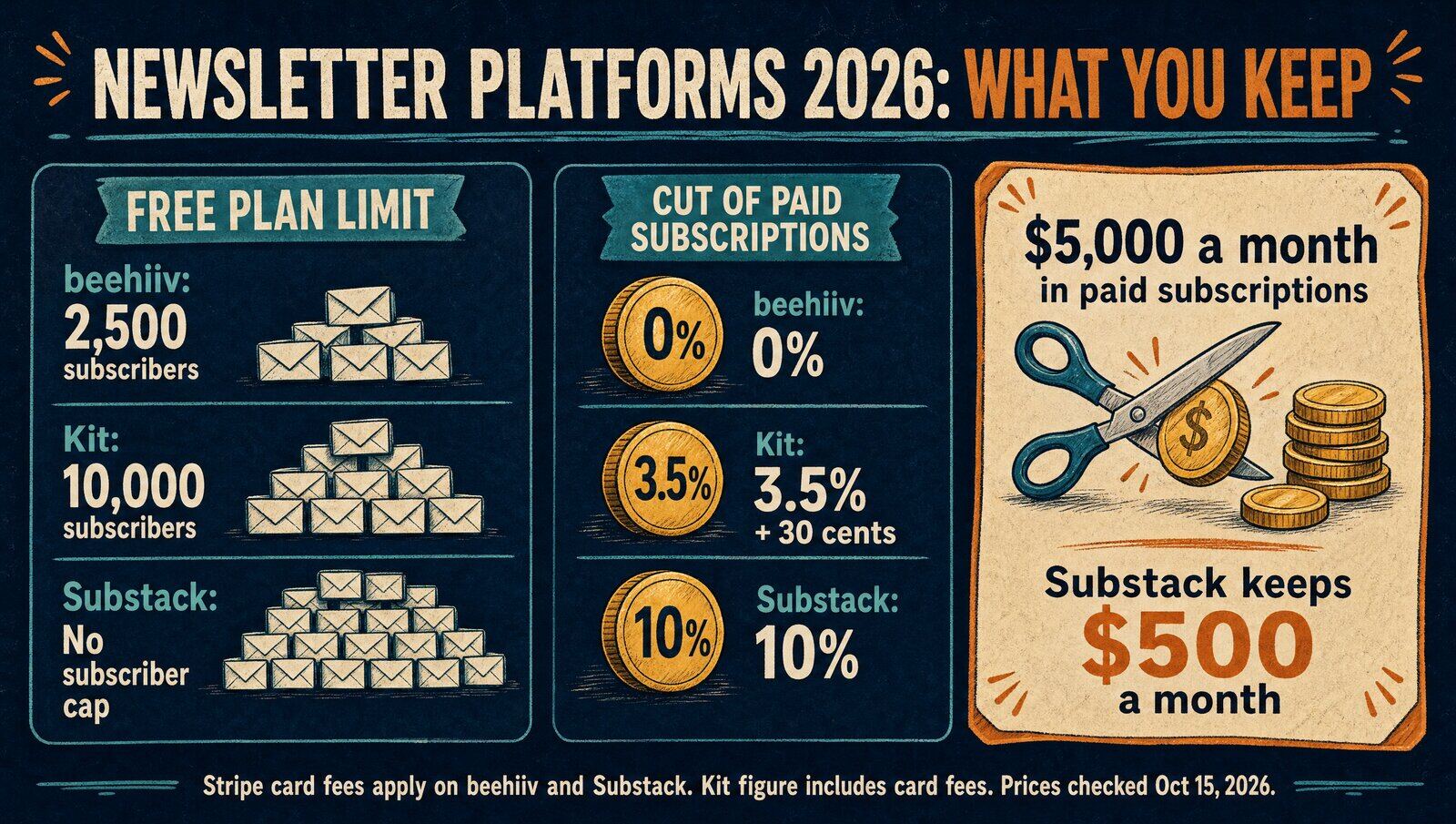
The free plans decide where you start, but the cut of paid subscriptions decides what you keep. That cut is where the three split furthest apart.
The 5 platforms at a glance
- 0% cut of paid subscriptions
- Ad network and paid recommendations
- API, plus webhooks on paid plans
The catch: no automations on the free plan.
Kit- Biggest free plan here
- Most mature visual automations
- Sells digital products and subscriptions
The catch: automations need a paid plan.
Substack- Built-in reader discovery in its app
- Custom domain for $50 once
- Full zip export of posts and stats
The catch: keeps 10% of paid revenue.
Ghost- Open source, can run on your server
- 0% cut on Publisher and up
- Free custom domain on all plans
The catch: Starter ($18) can't take payments.
- Markdown-friendly, popular with developers
- Sends from your own domain
- Paid subs as a $9/mo add-on
The catch: no ad or discovery network.
Prices at a glance
Prices checked October 15, 2026, on each company's own pricing page.
| Platform | Free plan | At 1,000 subscribers | At 10,000 subscribers | Cut of paid subs | Custom domain |
|---|---|---|---|---|---|
| beehiiv | Up to 2,500 | Lite $49/mo yearly ($59 monthly) | Lite $119/mo yearly ($139 monthly) | 0% (Stripe fees apply) | Paid plans |
| Kit | Up to 10,000 | Creator $33/mo yearly ($39 monthly) | $0 on Free, under 10,000 | 3.5% + 30c, card fees included | Landing pages |
| Substack | Free, no subscriber cap | $0 | $0 | 10% plus Stripe fees | $50 one-time |
| Ghost(Pro) | Self-host only | Publisher $29/mo yearly | Not listed | 0% on Publisher and up | Free on all plans |
| Buttondown | First 100 | Not listed | Not listed | Paid subs are a $9/mo add-on | Sending included, archive $29/mo add-on |
What each one can do
| Feature | beehiiv | Kit | Substack | Ghost | Buttondown |
|---|---|---|---|---|---|
| Free plan | ✓ | ✓ | ✓ | Self-host | 100 subs |
| 0% cut of paid subscriptions | ✓ | ✗ | ✗ | ✓ | – |
| Built-in ad network | Paid plans | – | – | – | ✗ |
| Earn from paid recommendations | Paid plans | Paid plans | – | – | ✗ |
| Automations | Paid plans | Paid plans | Basic | – | $29 add-on |
| Public API | ✓ | ✓ | ✗ | – | – |
| CSV export of subscribers | ✓ | ✓ | ✓ | – | – |
– means the company hasn't said. Substack doesn't document a public API.
beehiiv: the best platform for a newsletter business
beehiiv's free plan covers up to 2,500 subscribers and already includes the recommendation network and API access. Lite runs $49 a month billed yearly at 1,000 subscribers and $119 at 10,000. Pro is $95 at 1,000 and $199 at 10,000, billed yearly.
The money tools are the reason to pick it. beehiiv takes 0% of paid subscriptions, so you only pay Stripe's 2.9% plus 30 cents. Lite and up add the ad network and paid recommendations (formerly Boosts), where other newsletters pay you for each subscriber you send them.
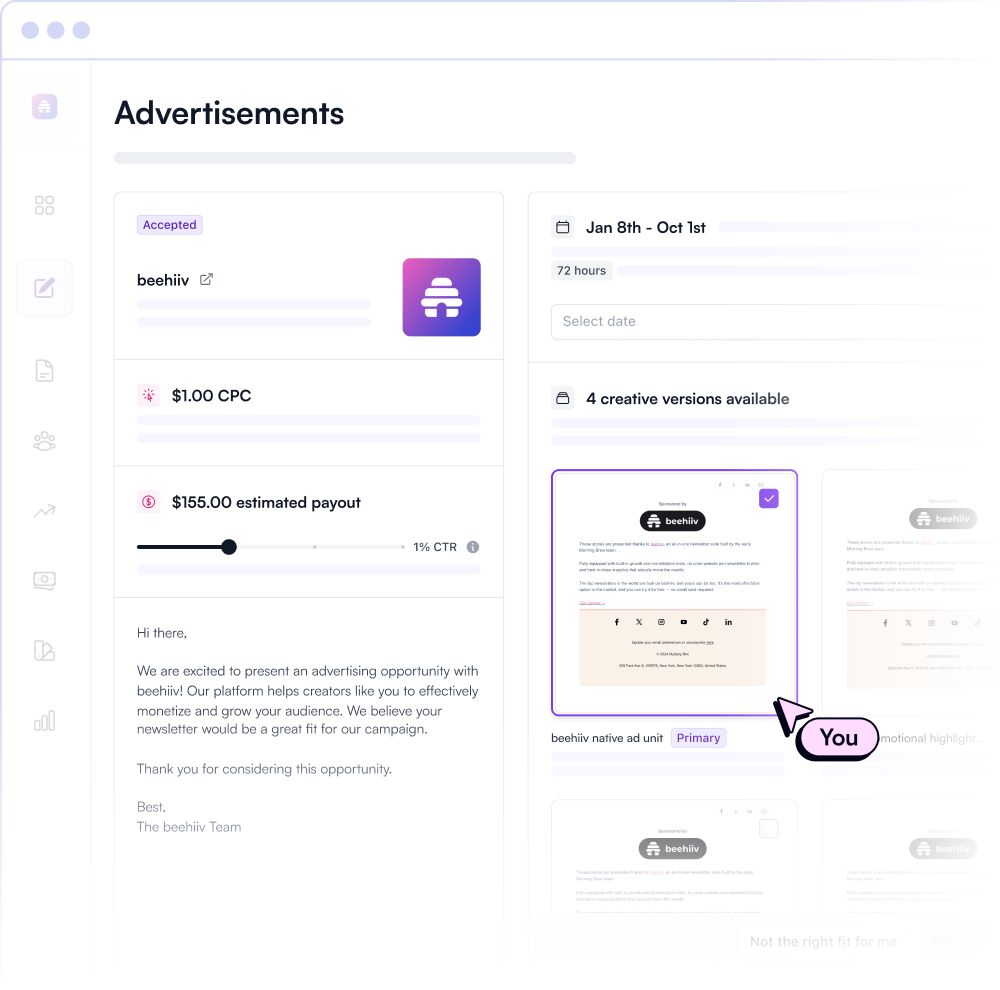
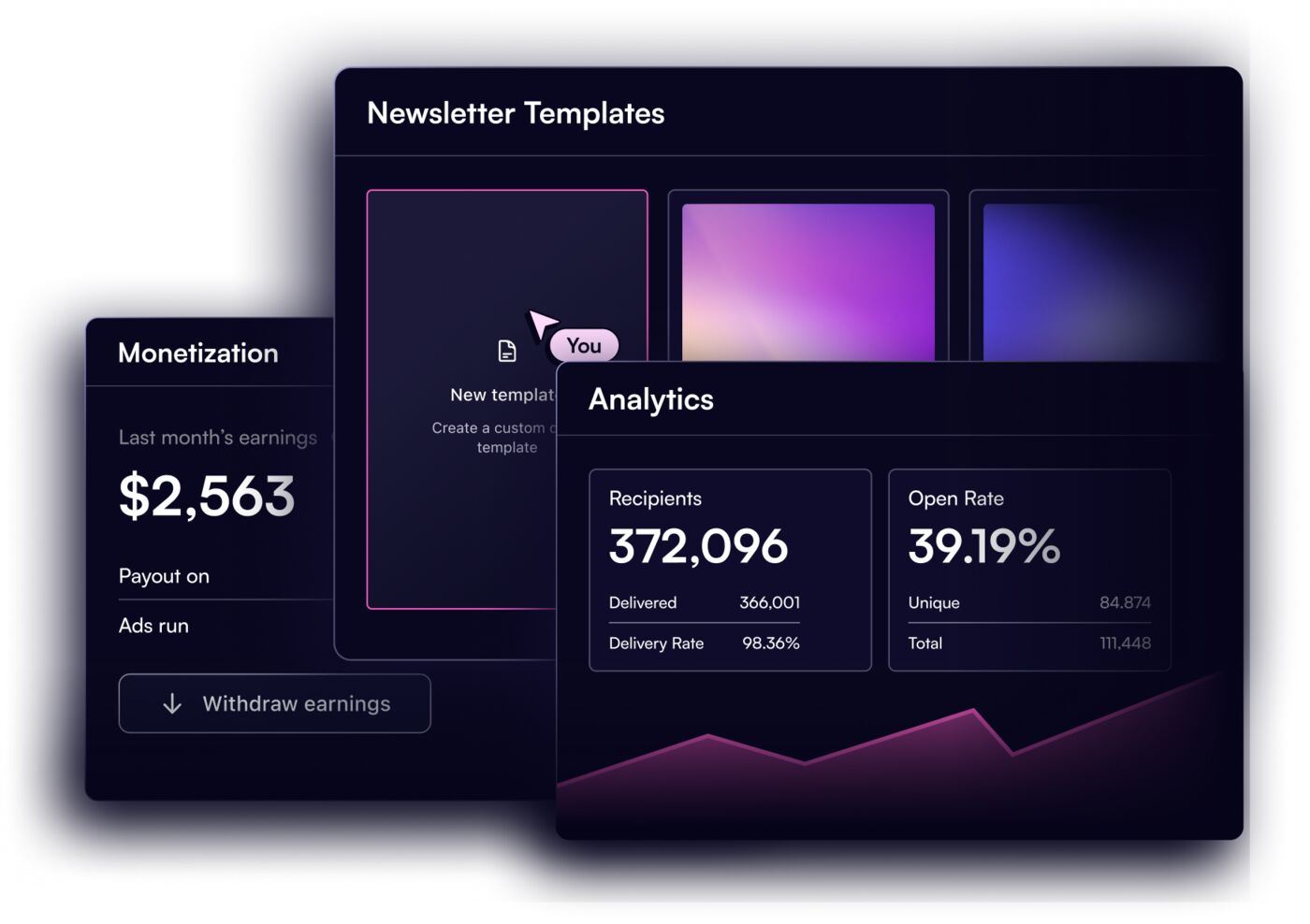
Lite includes three webhooks and 10 live automations; Pro removes both limits and adds click-triggered automations. The catch: the free plan has no automations or webhooks, and the ad network and paid recommendations aren't on trials or in every region.
Kit: the best for creators who sell
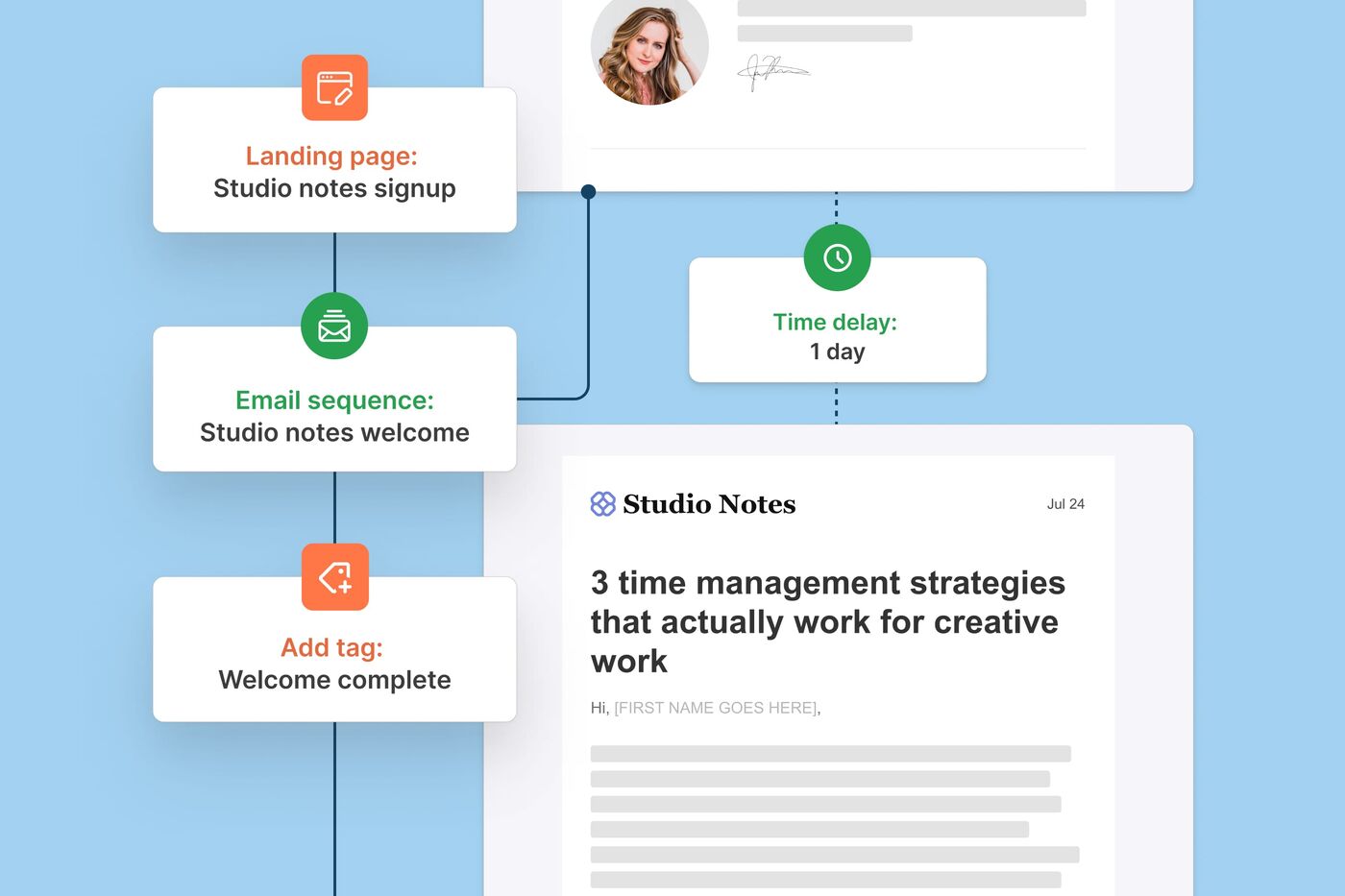
Kit, formerly ConvertKit, is a creator email tool first and a newsletter host second. Free covers up to 10,000 subscribers with unlimited broadcasts, forms, landing pages, tagging, A/B tests, API access and digital product sales.
Automations, sequences and RSS campaigns need Creator, $33 a month billed yearly or $39 monthly at 1,000 subscribers. Pro is listed at $66 a month billed yearly, with a first-year promo of $50. Kit charges 3.5% plus 30 cents on sales, card fees included, and paid recommendations carry a 23.5% fee.
The catch: the pricing page only shows the 1,000-subscriber price, so check Creator's cost at your list size. The hosted newsletter site is also thinner than beehiiv's or Substack's.
Substack: the easiest free start
Substack costs nothing until you earn: no monthly fee, no subscriber cap. Your posts live inside the Substack app, where readers find new writers through recommendations and the feed, which is worth a lot when you start from zero.
The price shows up when you go paid. Substack keeps 10%, and Stripe adds 2.9% plus 30 cents per payment and a 0.7% recurring billing fee. At $5,000 a month in subscriptions, that's $500 a month to Substack, more than beehiiv Pro costs at 10,000 subscribers.
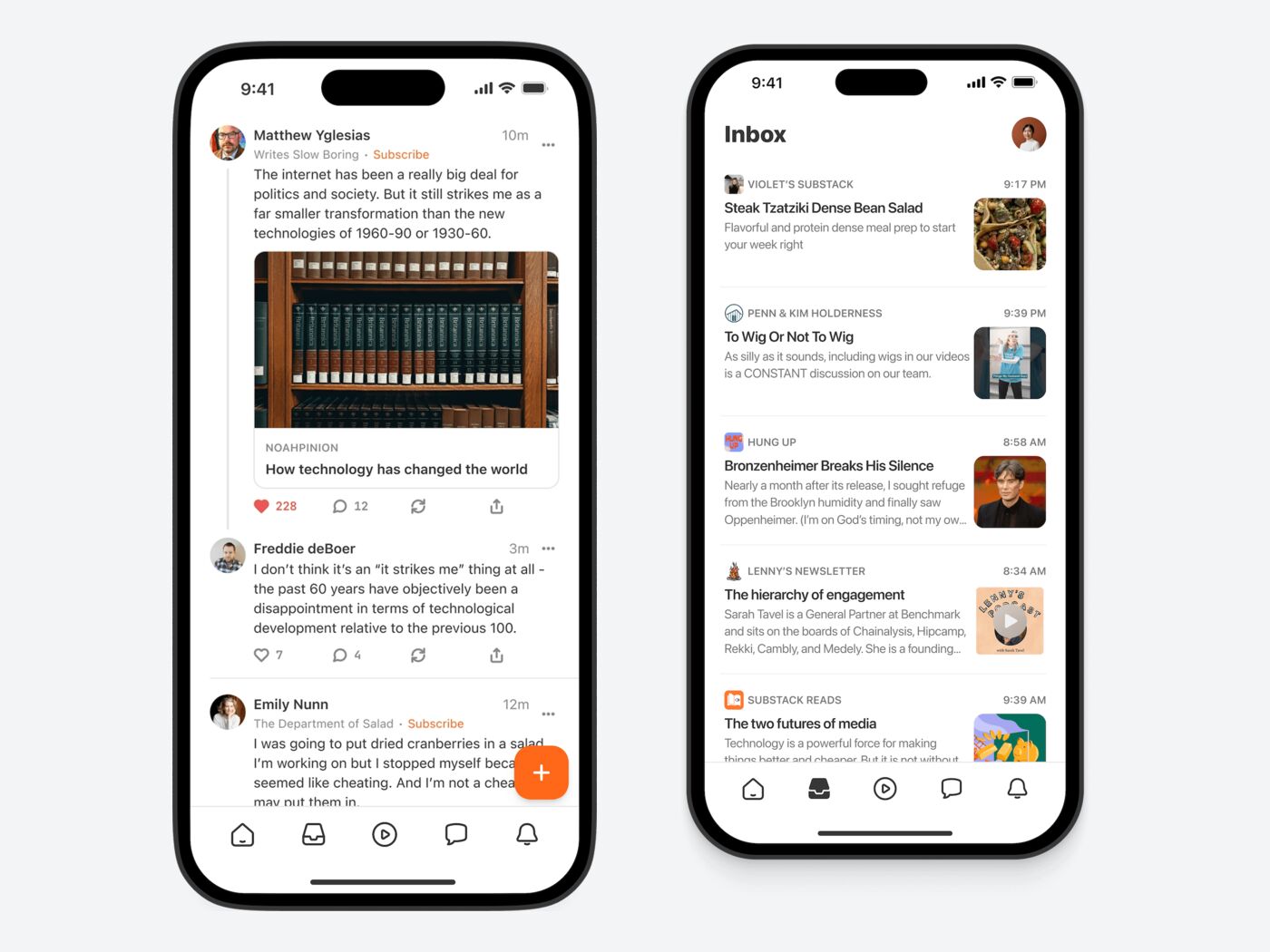
The catch: no documented public API or webhooks, basic automations, and a cut that never goes away. You do own your list, with a CSV or full zip export in Settings.
What about Ghost and Buttondown?
Ghost is open source, so you can self-host it; Ghost's docs put that at about $10 a month for a server plus around $15 for email delivery. Ghost(Pro) Publisher is $29 a month billed yearly for 1,000 members, with a 0% cut. Our VPS guide covers where to run it.
Buttondown is free for 100 subscribers. Paid subscriptions, tagging and analytics are a $9 a month add-on, and automations plus custom-domain archives are $29 a month.
Which one should you use?
The verdict
beehiiv is the best newsletter platform for most people in 2026. It's the only one of the big three with a 0% cut, an ad network, paid recommendations and a real API in one place. Choose Kit if you sell products, and Substack if you want to start writing for free today.
FAQ
Is beehiiv better than Substack?
For a newsletter you plan to monetize, yes. beehiiv takes 0% of paid subscription revenue, has an ad network and offers webhooks and an API, while Substack keeps 10% of paid revenue and doesn't document a public API. Substack is better if you want a free start and its built-in reader discovery.
Is Kit better than beehiiv?
Kit is better for creators who sell digital products and need detailed automations, and its free plan covers up to 10,000 subscribers versus beehiiv's 2,500. beehiiv is better for ad-supported and paid newsletters, with a 0% subscription cut and a built-in ad network.
How much does Substack take from paid subscriptions?
Substack keeps 10% of paid subscription revenue. Stripe also charges 2.9% plus 30 cents per card payment and a 0.7% recurring billing fee. Free newsletters on Substack cost nothing.
What is the best free newsletter platform?
Kit has the largest free plan, covering up to 10,000 subscribers with unlimited broadcasts, but no automations. Substack is free with no subscriber cap until you charge for subscriptions, and beehiiv's free plan covers up to 2,500 subscribers.
Can I move my subscribers if I switch platforms?
Yes. beehiiv, Kit and Substack all let you export your subscriber list as a CSV from the dashboard, and Substack also offers a full zip export of posts and stats.